
The science, explained: Standard scores
What does a score of 84 actually mean?
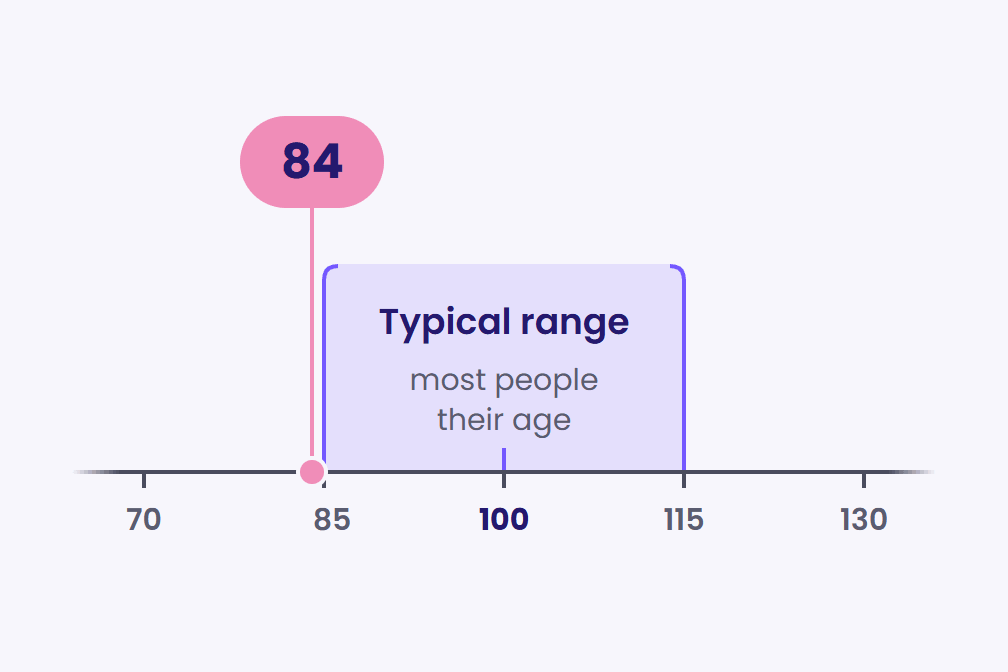
Most people the learner's age score between 85 and 115, the typical range. 84 is the first score outside it.
The short answer
Standard scores
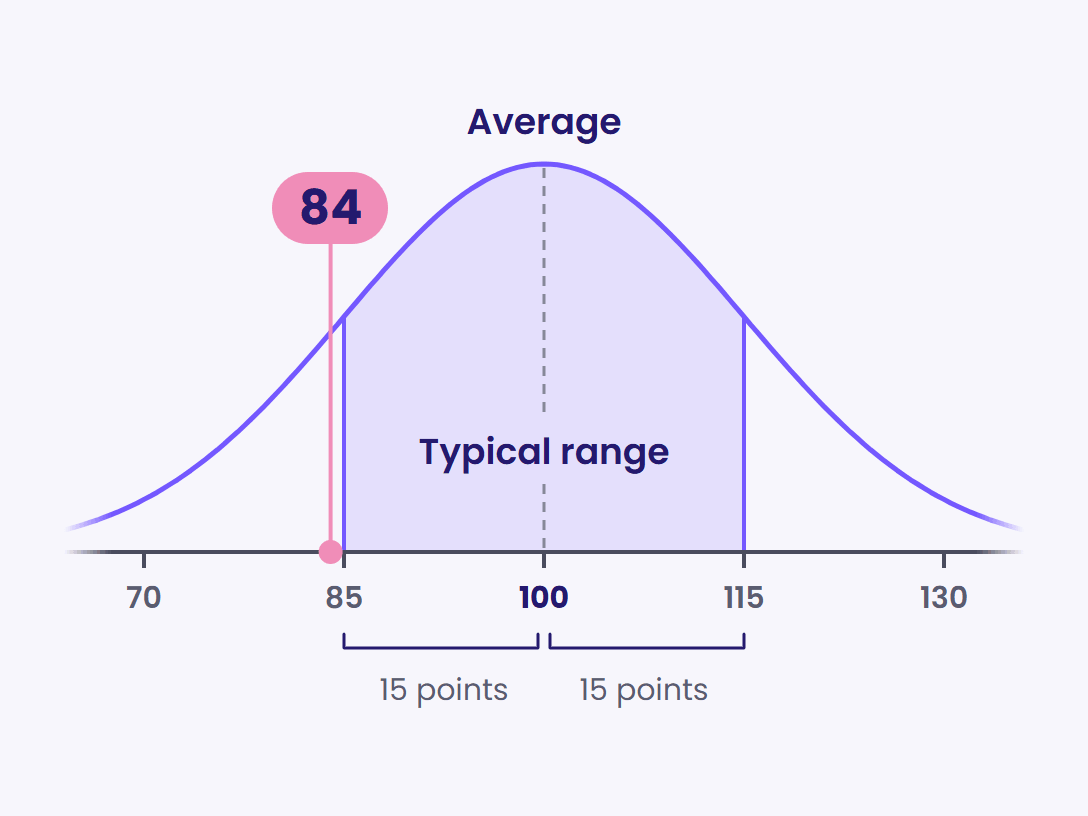
Most people score between 85 and 115 for their age: that is the typical range, with 100 in the middle. A score of 84 is the first score below the typical range. Scores on this scale are called standard scores.
Why the line is at 84
The line at 84 is drawn where the exam boards' own guidance draws it, not where we chose to put it. The exam boards' joint body, the Joint Council for Qualifications (JCQ), and the access arrangements guide from PATOSS, the specialist teachers' and assessors' association, describe a standardised score of 84 or less as below average. Anyone working with access arrangements knows the line. Our line is the sector's own.
What the science calls it
Three terms you may see in a report
The typical range and the exam boards' line have already shown you the idea. These are the names the science gives to what they showed.
- Standard score (or standardised score)
- 100 is average for people of the same age; 15 points is one standard deviation, the usual spread. The typical range, 85 to 115, is one either side of 100.
- Percentile
- The share of people of the same age who score lower. A score of 84 is at the 14th percentile: 14 in every 100 people that age score lower.
- Below average and low average
- The exam boards' names for a score of 84 or below and a score of 85 to 89. They describe a score, never a learner.
Why it matters before you act on a score
A line, not a cliff. A learner on 84 and one just above the line did much the same. The line has to sit somewhere, so a score near it is a prompt to look closer with what you know, not a verdict.
Ask where the line comes from. Ask it of any assessment, ours included: where is the line drawn, compared with whom, and who drew it? A recognised convention is one you, a colleague or the learner can check.
Scores say what, not why. A score below the typical range says the learner found these tasks harder than most people their age. It doesn't say why, and it isn't a diagnosis. The conversation with the learner is where you find out.
How our assessment uses 84
84 or below starts a conversation, never a diagnosis
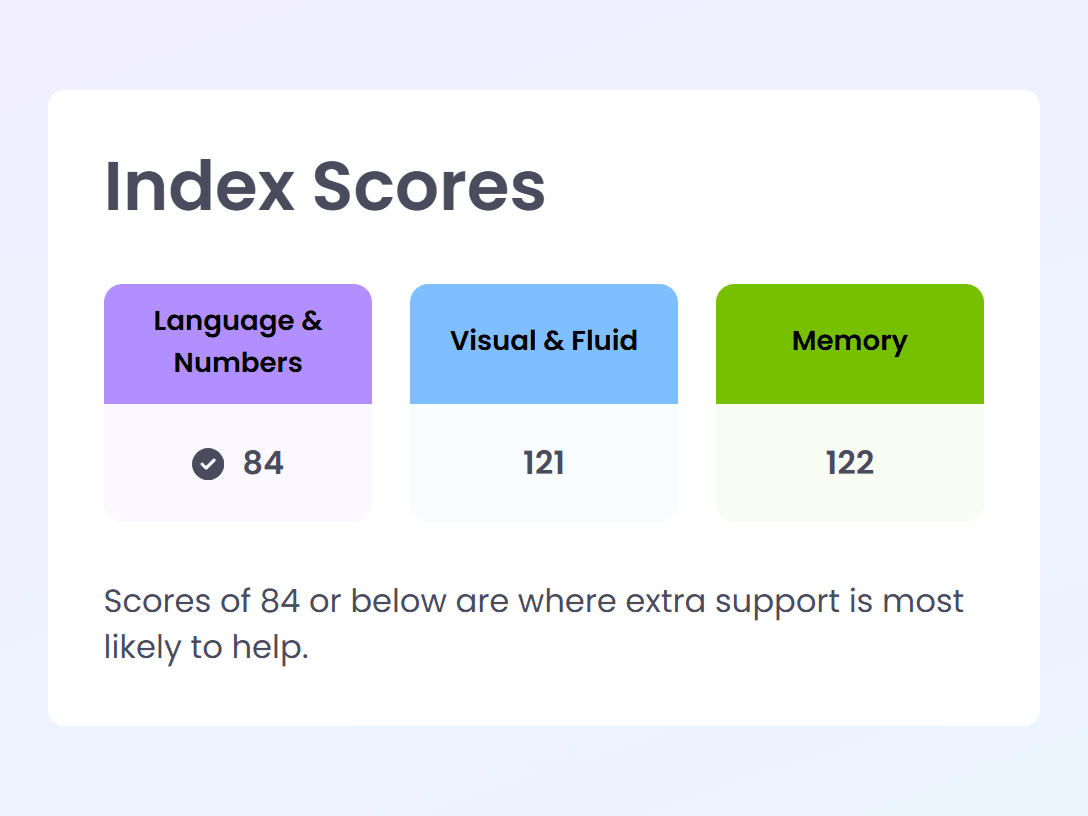
Every domain and index score the cognitive assessment reports is a standard score: compared with 26,865 UK apprentices, adjusted for age. The three index scores say whether support may be needed, and the nine domains say what kind.
- Consider needs assessment: at least one index score is 84 or below. It recommends a needs-assessment conversation between the tutor and the learner.
- Monitor and review: a domain scores 84 or below, but no index does. Go through the results with the learner; no needs assessment for now.
- No need identified: nothing scores 84 or below.
- What that means for you: each is a signal for your judgement, never a verdict or a diagnosis. You decide, with the course and what you know of the learner in view.
Questions tutors ask
Is a learner on 84 really different from one just above the line?
Not much. A point or two either side is close, and every score carries a little give. The line has to sit somewhere, and the sector puts it at 84. The stronger signal, Consider needs assessment, comes from the index scores, which pool several domains, not from one task. Read a score near the line with what you see of the learner, and talk to them: your judgement decides.
Does a score of 84 or below mean a learner has a learning difficulty?
No. It means they found these tasks harder than most people their age. The assessment measures cognition, and a score is never a diagnosis. A score below the typical range is a reason for a conversation with the learner about what might help, and the support decision is yours.
Does 84 or below mean a learner gets exam access arrangements?
Not on its own. The 84 line comes from the exam access guidance, but access arrangements are a separate, formal process that needs a qualified assessor present. The assessment's Speed of Working result is accepted by most awarding organisations as evidence toward additional time, with that assessor. The adjustments in a learner's support plan are everyday support, not exam access arrangements.