
The science, explained: Validity
Does it measure what it says it measures?
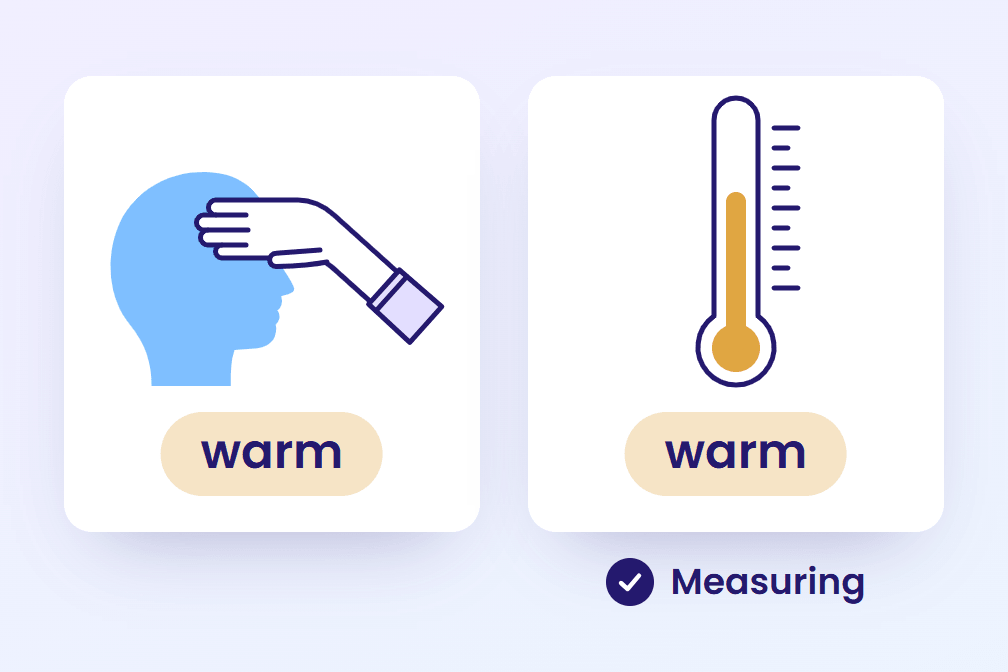
A thermometer against a hand on the forehead: both say "warm"; only one is measuring. A learner's score has to be the thermometer.
The short answer
Validity
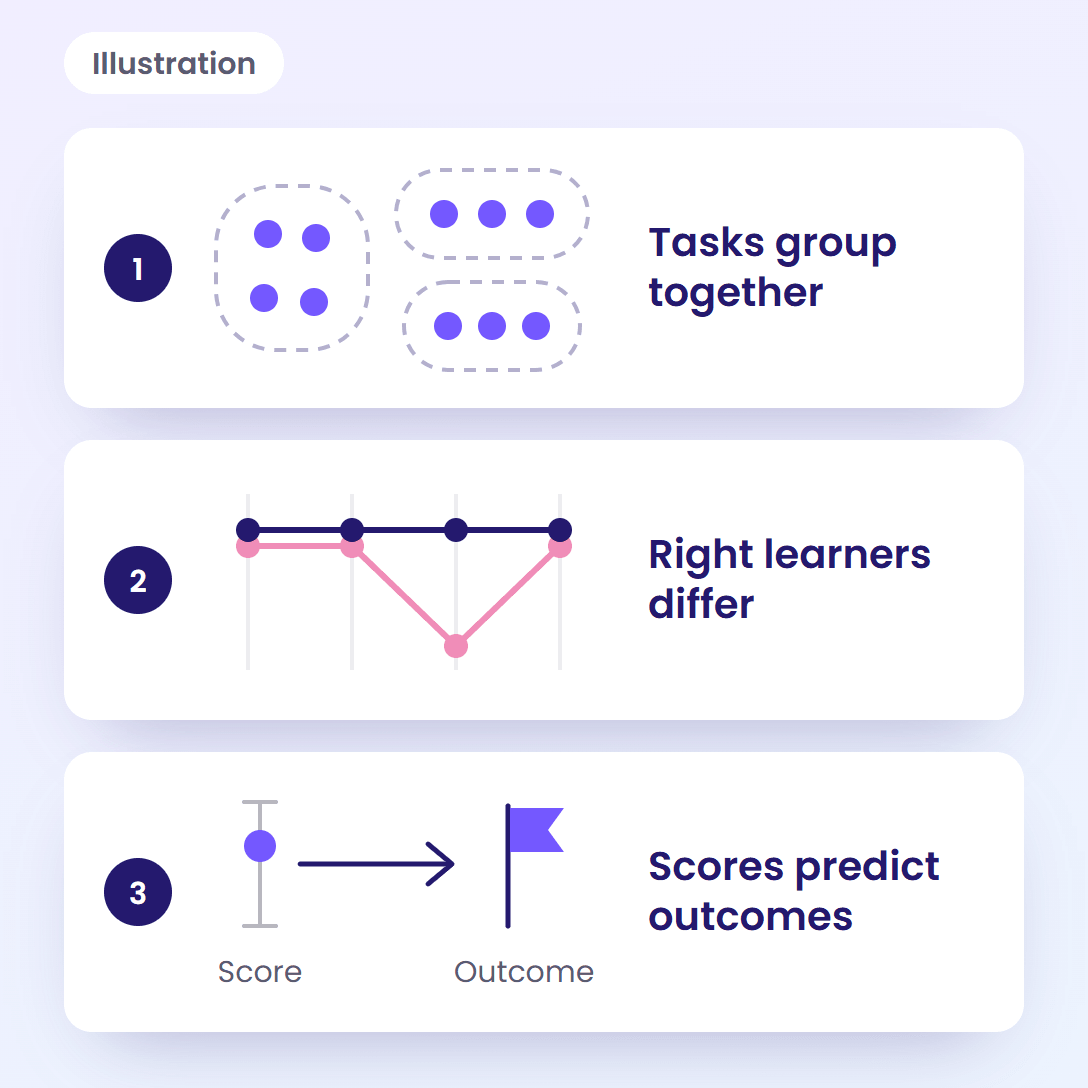
Validity is the evidence that an assessment measures what it claims to, for learners like yours. It is shown three ways: the tasks group together the way the theory says they should, the right learners score differently, and the scores link to outcomes that matter. The thermometer has that evidence behind it; the hand on the forehead doesn't.
When a spelling test measures speed
Picture a spelling test that is really a handwriting-speed test: a learner who spells every word right but writes slowly runs out of time and scores low. The test said "spelling" but measured speed. You'd spot that in your own test, and rightly. With a cognitive assessment you can't tell by looking at the tasks whether each measures what it says, so the trust has to come from evidence.
What the science calls it
Three kinds of evidence you may see in a report
Validity is the overall word. These are the names the science gives to the three ways the definition described.
- Construct validity, sometimes called internal structure
- The tasks group together the way the theory of how people think says they should. Tasks measuring related abilities move together; unrelated ones don't.
- Known-groups validity
- Groups of learners that research says should score differently on a particular task do, and score close to typical everywhere else.
- Criterion or predictive validity
- Scores link to an outcome that matters to you, such as whether a learner completes their programme.
Why it matters before you act on a score
Support goes where the score points. If a score measures something other than it says, the support plan built on it aims at the wrong thing, and a learner who needs help can be missed.
Ask any assessment, ours included. Does it measure what it says, and predict a real outcome? Was that shown with learners like yours? It's a fair question to put to any assessment before you choose one.
Consistent isn't the same as right. A score can come out the same every time and still measure the wrong thing. Consistency is reliability, a separate question: reliability is consistency, validity is truth. If the learner took it again, would they get a similar score?
How our assessment measures up
Independently validated, with evidence for all three ways
The cognitive assessment has been independently validated as accurate and robust, with evidence for each of the three ways an assessment shows it measures what it says: how its tasks group, who scores differently, and whether its scores link to real outcomes.
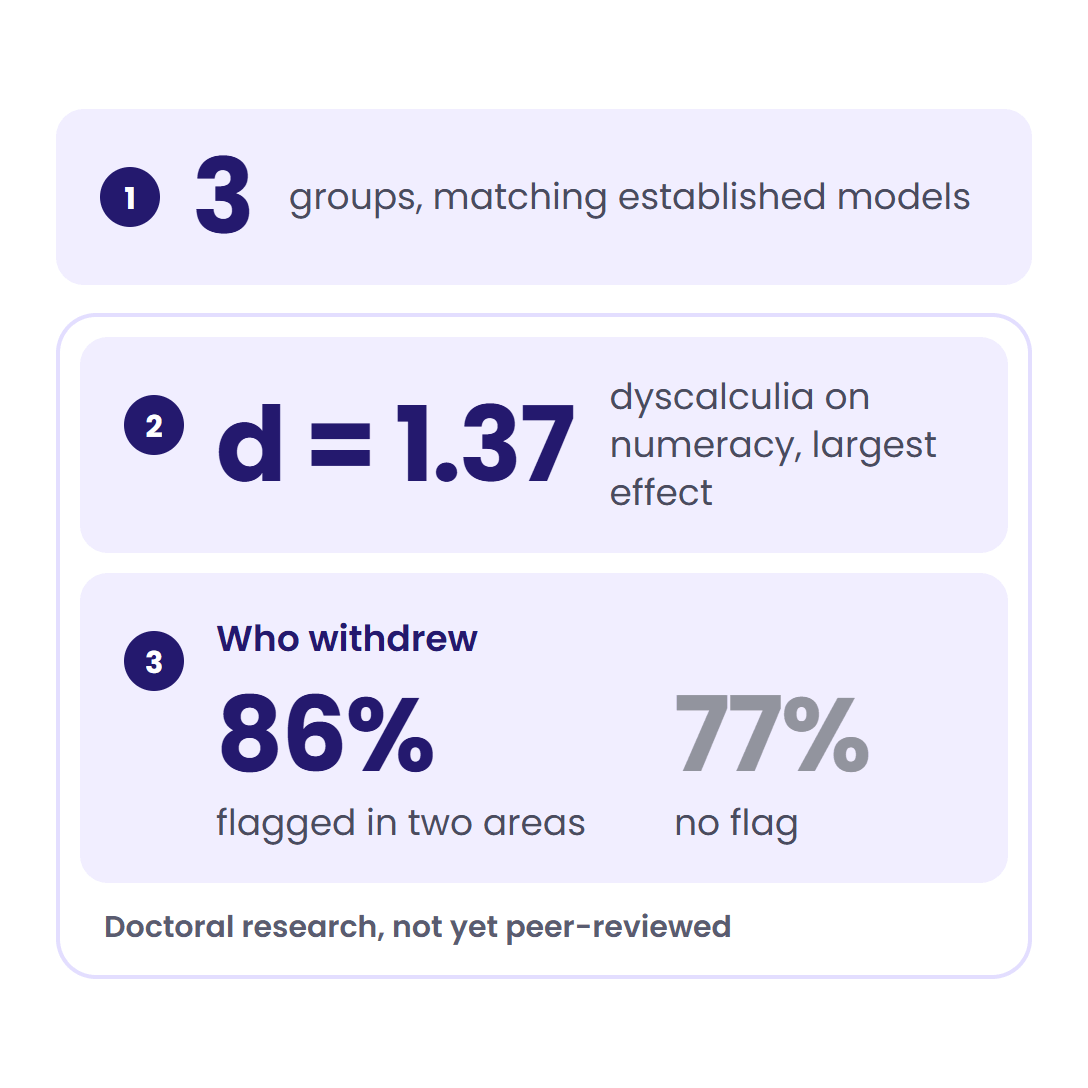
- How the tasks group: they fall into three groups that match established models of how people think, and those groups are the three index scores (Language & Numbers, Visual & Fluid, Memory).
- The right learners differ: the cognitive differences associated with dyslexia show on reading decoding, and those associated with dyscalculia on numeracy. It doesn't flag ADHD or autistic learners as having a learning-difference profile.
- Scores link to outcomes: apprentices flagged in two cognitive areas withdrew at 86%, against 77% with no flag, and the cognitive profile predicted withdrawal better than a diagnosis label. That link is probably an underestimate.
- The second and third studies are doctoral research at Newcastle University, independently supervised and being prepared for publication, so not yet peer-reviewed.
The assessment has also been reviewed by the Professional Association of Teachers of Students with Specific Learning Difficulties (PATOSS) against the Joint Council for Qualifications' (JCQ) scientific-validity requirements.
Questions tutors ask
What if a learner's score doesn't match what I see in class?
That's worth noticing, not a sign you or the score is wrong. The assessment measures cognition, and cognition is one of many influences on how a learner gets on. Talk it through with the learner and look at the domain scores to see what kind of difficulty it might be. A score is never the only basis for a decision: your judgement and what you see over the weeks decide.
Is it a diagnosis?
No. The assessment measures the cognitive differences associated with dyslexia and other specific learning differences. A result is a signal for a conversation about support and for professional judgement, not a diagnosis.
Isn't a reliable assessment a valid one?
No. Reliable means consistent: the score would come out much the same again. Valid means it measures what it says it measures. A score can be consistent and still measure the wrong thing. Reliability is consistency, validity is truth, and a score you act on needs both.
Why does 'learners like yours' matter?
Validity evidence holds for the kind of people it was gathered from. Ours comes from UK apprentices: 26,865 in the study of who scores differently, and 588 at three providers in the outcomes study. So ask who any assessment's evidence comes from, and whether they are like your learners.
Has the research been peer-reviewed?
The first paper is our science team's development paper. The second and third are doctoral research at Newcastle University, independently supervised and being prepared for publication, so not yet peer-reviewed. Separately, PATOSS has reviewed the assessment against JCQ's scientific-validity requirements.