
For colleges
Find and support learners' needs, with or without a label
Under the SEND proposals, support would no longer wait for a diagnosis, so fewer learners would arrive with one. Find their needs at the start.

What it means for your college
Fewer learners will arrive with an EHCP. Their needs will not have gone
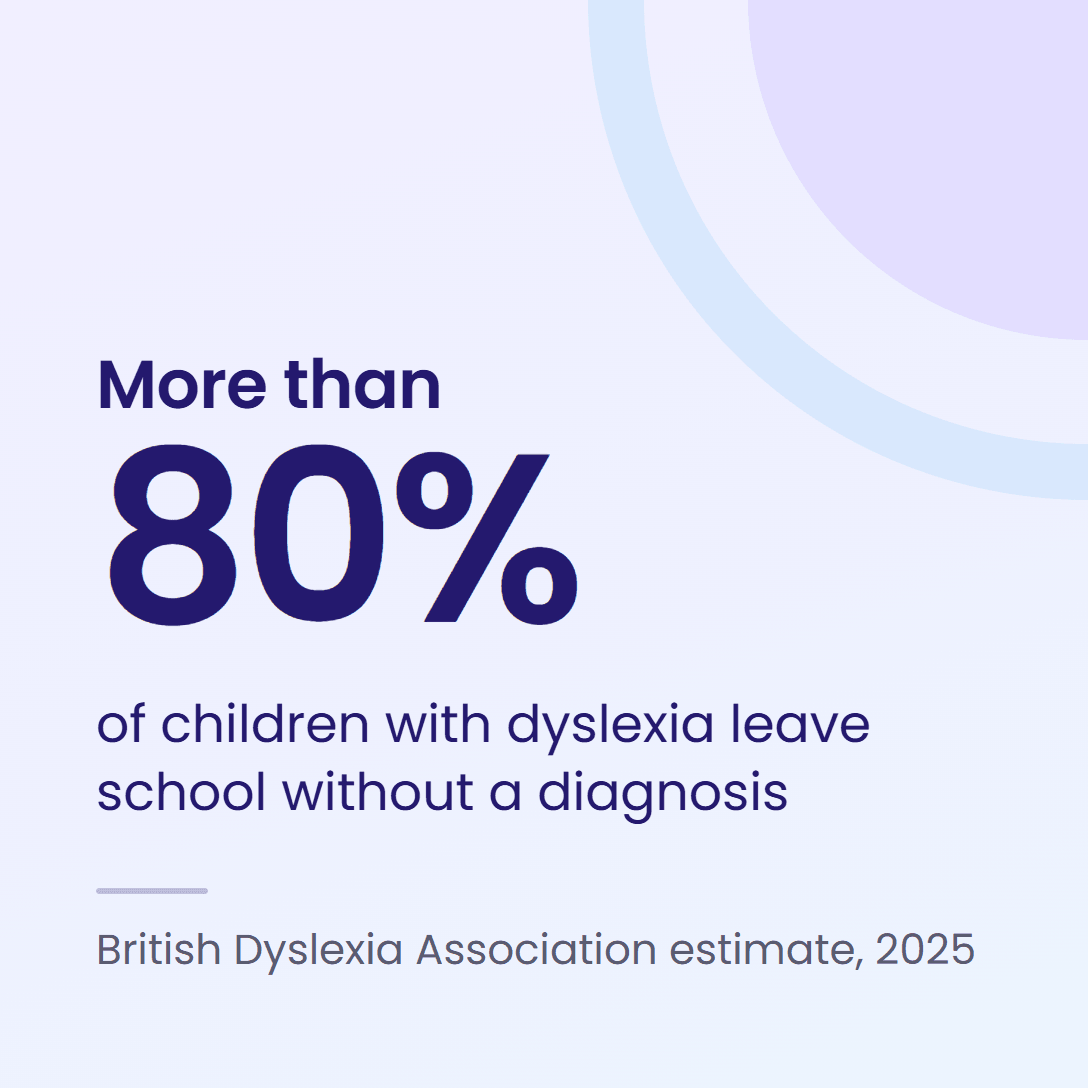
Under the SEND proposals, support would stop depending on a diagnosis, and EHC plans would sit at the specialist layer only, not before September 2030. Many needs already leave school unlabelled: more than 80% of children with dyslexia leave school without a diagnosis (British Dyslexia Association estimate, 2025). What learners, schools and plans tell you stays, but covers only those already identified. We think finding need moves to the college.
- Inspectors already ask how your staff identify learners who need support, including learners nobody has flagged.
- Colleges set out in their accountability statement how the Inclusive Mainstream Fund strengthens inclusive practice and improves outcomes for learners.
- A plan for each learner who needs one, agreed and reviewed, is what the proposals point to, and what good support looks like now.
The work the proposals point to is the work inspectors and the Inclusive Mainstream Fund ask about today.
Customer story · Bedford College Group
Bedford College Group chose to find and support need across its colleges
A multi-site further education college group, Bedford trialled the full assess, plan, do, review cycle across four curriculum areas and three colleges over three months, so its tutors could give personalised support. It then committed to rolling it out to every learner from September 2026.
“The trial has demonstrated that Cognassist has the ability to work effectively at an institutional scale, the results we've seen have given us the confidence to commit to a full rollout to every learner from September”
How it works
Needs found at the start, and a plan agreed, with or without a label
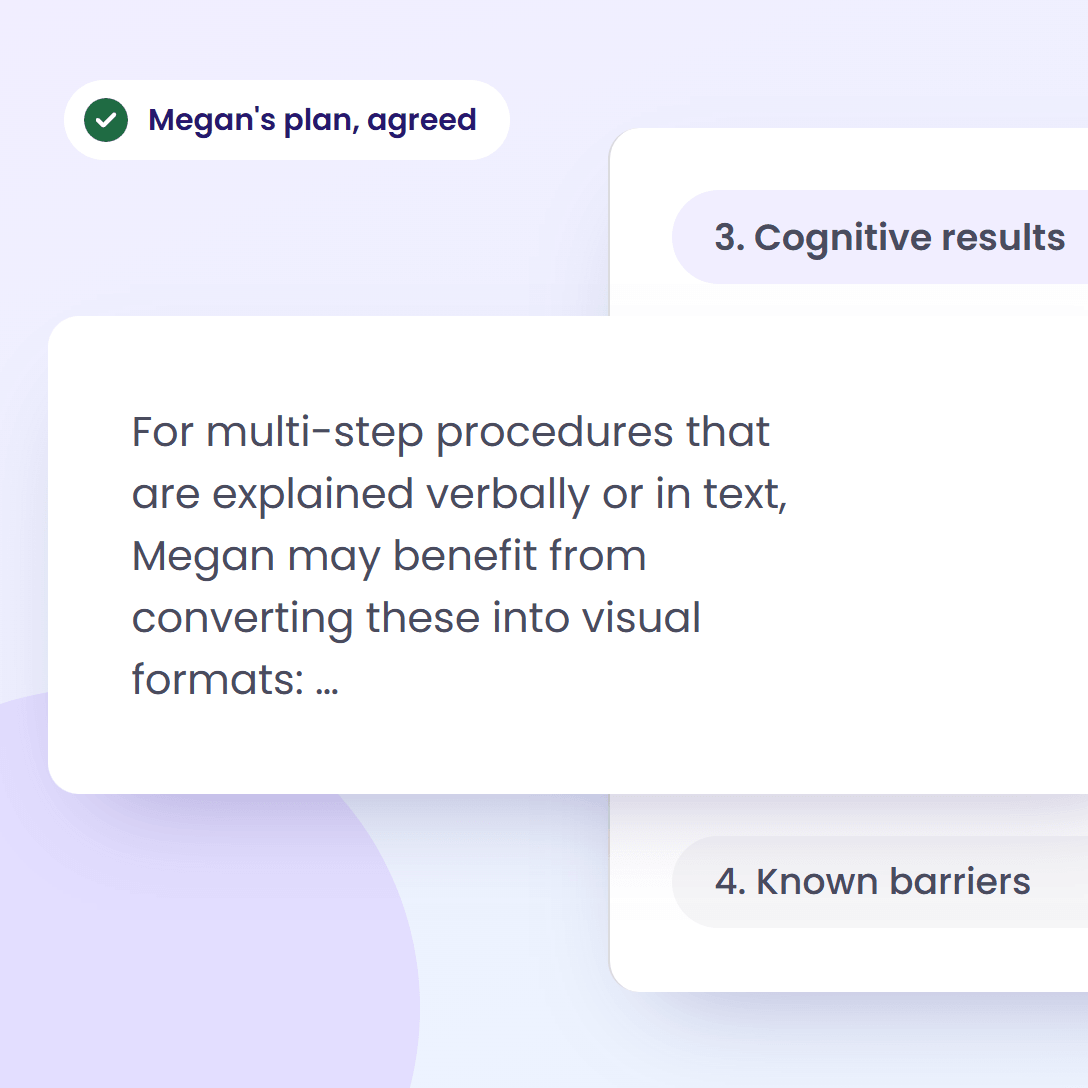
The cognitive assessment at the start shows each learner's barriers to learning, including those with nothing on record: a signal for your staff's judgement, never a diagnosis. Anything already known, such as a diagnosis, an EHC plan or what the learner tells you, is recorded beside it, so support neither waits for a label nor ignores one. The tutor and the learner then agree the plan together.
- Needs found in the first weeks, before a learner struggles, whether or not anyone knew of them.
- A plan of barriers, reasonable adjustments and goals, agreed with the learner, reviewed at the interval you set, and exported as a PDF whenever you need the record.
- Tutors trained in the flow of work to support everyday needs, so your specialists keep their time for the most complex.
What is proposed, and when
The Schools White Paper of 23 February 2026 and its SEND consultation propose support not dependent on a diagnosis. They are proposals, not law, needing an Act of Parliament: the reformed system is not expected before September 2029, and EHCP support would not change before September 2030. They name colleges; whether they reach training providers waits for the Bill. Live now: the Inclusive Mainstream Fund for 16 to 19 providers.
The proposals, and the work today
What the proposals would ask of a college, and what you can do now
| What the SEND proposals of February 2026 would ask (proposed, not law; not before September 2029) | What a college can do today | |
|---|---|---|
| Four layers of support | Universal, targeted, targeted plus and specialist. Once the reform is complete, EHC plans would sit at the specialist layer only, with no change before September 2030. | The cognitive assessment at the start shows a learner's barriers to learning, a signal for your staff's judgement about the support they need. It is never a diagnosis, and never places a learner in a layer automatically. |
| An individual support plan | A digital plan for every learner with SEND, updated at least annually, capturing barriers to learning, day-to-day provision, reasonable adjustments and intended outcomes. | The support plan, agreed with the learner, records their barriers, their reasonable adjustments and support, and their goals, reviewed at the interval you set. Close to the proposed plan; not an individual support plan in law. |
| Staff training in SEND and inclusion | Training on SEND and inclusion for staff in every college, set out in the SEND Code of Practice. | Role-based training, with tutors trained in the flow of work, so they support everyday needs and your specialists focus on the most complex. |
Where to go next
Find needs at the start
How colleges find learners' needs in their first weeks, including the learners who have not told anyone.
How the support plan works
How the plan is built from the assessment, section by section, and agreed with the learner.
The proposals in full
Chris Quickfall's paper: the SEND proposals in sequence, and what they would mean for colleges and other post-16 settings.
The Inclusive Mainstream Fund
The fund for 16 to 19 providers that is live now, and how colleges explain its use.
FAQ
Questions
Why act before any of this is law?
You would not be acting for the law. Finding learners' needs at the start, a plan for each learner who needs one, and regular reviews are what inspectors ask about now, and what colleges set out in their Inclusive Mainstream Fund accountability statement. If the proposals become law, that work is already in place. If they change, it was worth doing anyway.Are these reforms law yet?
No. They were proposed in the Schools White Paper of 23 February 2026 and its SEND consultation, and need an Act of Parliament. The reformed system is not expected before September 2029, and EHCP support would not change before September 2030 at the earliest. The Inclusive Mainstream Fund for 16 to 19 providers is already live.Would the proposed duties apply to training providers?
The consultation defines post-16 settings as institutions in the further education sector, such as colleges and 16 to 19 academies; independent training providers are not named. Whether the plan and training duties reach training providers or apprenticeship provision will be settled only when the Bill is published. Finding learners' needs at the start matters either way.Is the Cognassist support plan an ISP?
It approximates the proposed ISP concept: a per-learner digital record of needs, day-to-day support and delivery, with monthly evidence. But the ISP legal duty is not enacted, and using the support plan does not make you compliant.Does the cognitive assessment place learners in a layer of support?
No. It shows a learner's barriers to learning as a signal for your staff's judgement about the support they need, alongside what the learner and any plan tell you. It never places a learner in a layer automatically, it is not a diagnosis, and it does not by itself establish disability under the Equality Act 2010.What would the training proposal mean for our tutors?
The proposals would have staff in every college trained in SEND and inclusion; that is proposed, not law. Role-based training, with tutors trained in the flow of work, builds it now: tutors support everyday needs with the plan in front of them, and your specialists' time goes to the most complex needs.Does Cognassist make us SEND-compliant or guarantee anything?
No. Cognassist helps you find and support learners' needs and evidence good inclusive practice. Compliance, and the statutory and inspection outcomes, are yours.
Support that does not wait for a label
Book a demo built around your college, your provision and your goals, and see how needs found at the start become plans agreed with each learner.