
For colleges and training providers
Identify learners' needs from the start
Find the learning needs your learners haven't told you about, from the start, and meet each one with a personalised support plan they agree.
Why it matters now
How you find learners' needs is now a question you'll be asked
How do you find learners' needs?
Inspectors explore in the planning call how your staff identify learners who need support, "even if leaders have not identified any" (Ofsted's operating guide for inspectors, September 2026).
Your apprentices lose out: in 2024/25 apprentices with a declared learning difficulty or disability achieved at 62.3%, against 65.9% for those without, and a barrier nobody finds never gets support.
Your college learners feel it after they leave: college students with a declared learning difficulty or disability were 9.3 points less likely to sustain a destination after 16 to 19 study, 64.6% against 73.9% (2024/25).
The proposed SEND reforms would mean fewer learners arrive with a need already identified, so more of the finding would sit with you.
228 of this year's 527 Ofsted reports on further education (FE) and skills providers, published from 12 January to 12 November 2026, praise needs being identified early and accurately.
Ways of finding need
At the start, every other way in waits for someone to already know
Asking a learner tells you how they see their own learning, and that matters. Measuring tells you how they actually process, remember and reason. Research finds the two only loosely agree. Each way in finds something, so keep them all: a measure at the start is added beside them, not swapped in.
- What learners tell you: respectful, and it stays. It finds what a learner knows about and chooses to share.
- Your onboarding screening questionnaire: quick, and what the rules ask for. It is still the learner's own answer.
- Prior records, a diagnosis or an education, health and care (EHC) plan: use them wherever they exist. They cover the learners already identified.
- A tutor noticing, then referring: tutors know their learners. It comes once a learner is already struggling.
Your English and maths assessment tells you where a learner is. A cognitive assessment tells you how they learn, and what might be in the way. Initial assessment asks for both.
See where the cognitive assessment fits in the graduated approach
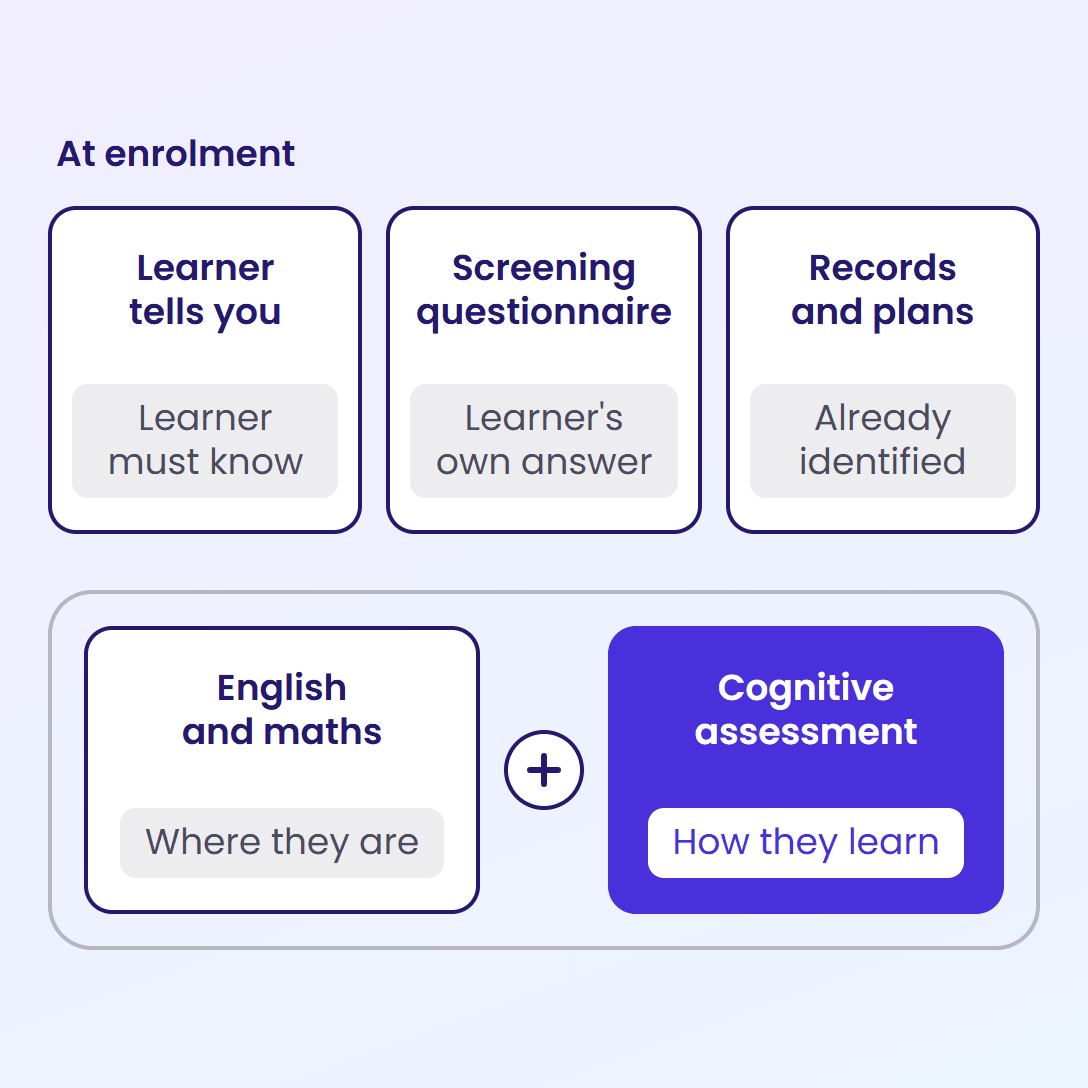
Initial assessment at enrolment: every way in stays, and the cognitive assessment is added beside English and maths.
By provider type
What learners declare, and what it leaves out
The figures differ by provider type, so here are yours.
Apprenticeship and adult skills providers
1 in 6 apprenticeship starts declare a learning difficulty or disability (16.7%, 2024/25), and 1 in 5 adult FE and skills learners (20.3%). Approximately 1 in 3 learners we assess in FE and apprenticeships have a cognitive barrier that warrants support, and many of them have needs that self-declaration and screening miss.
- Declaring depends on knowing, and on choosing to say.
- Measuring at enrolment finds needs before a learner struggles, whether or not they said.
Colleges
Nearly 1 in 3 under-19 learners at general FE colleges declare a learning difficulty or disability, and 1 in 15 has an EHC plan (DfE ILR data, statistics in development, 2024/25). Approximately 1 in 3 learners we assess in FE and apprenticeships have a cognitive barrier that warrants support. You already see need at that scale. A declaration tells you there is a need, not what it is; a plan sets out the most significant needs of those with one.
- Measuring at the start shows what each learner's barrier is, for every learner who takes it, not only that they declared one.
- Support planned to fit from the first weeks, beside what the plan and the learner tell you.
- The same starting point across every site and tutor.
Case study · Educationwise
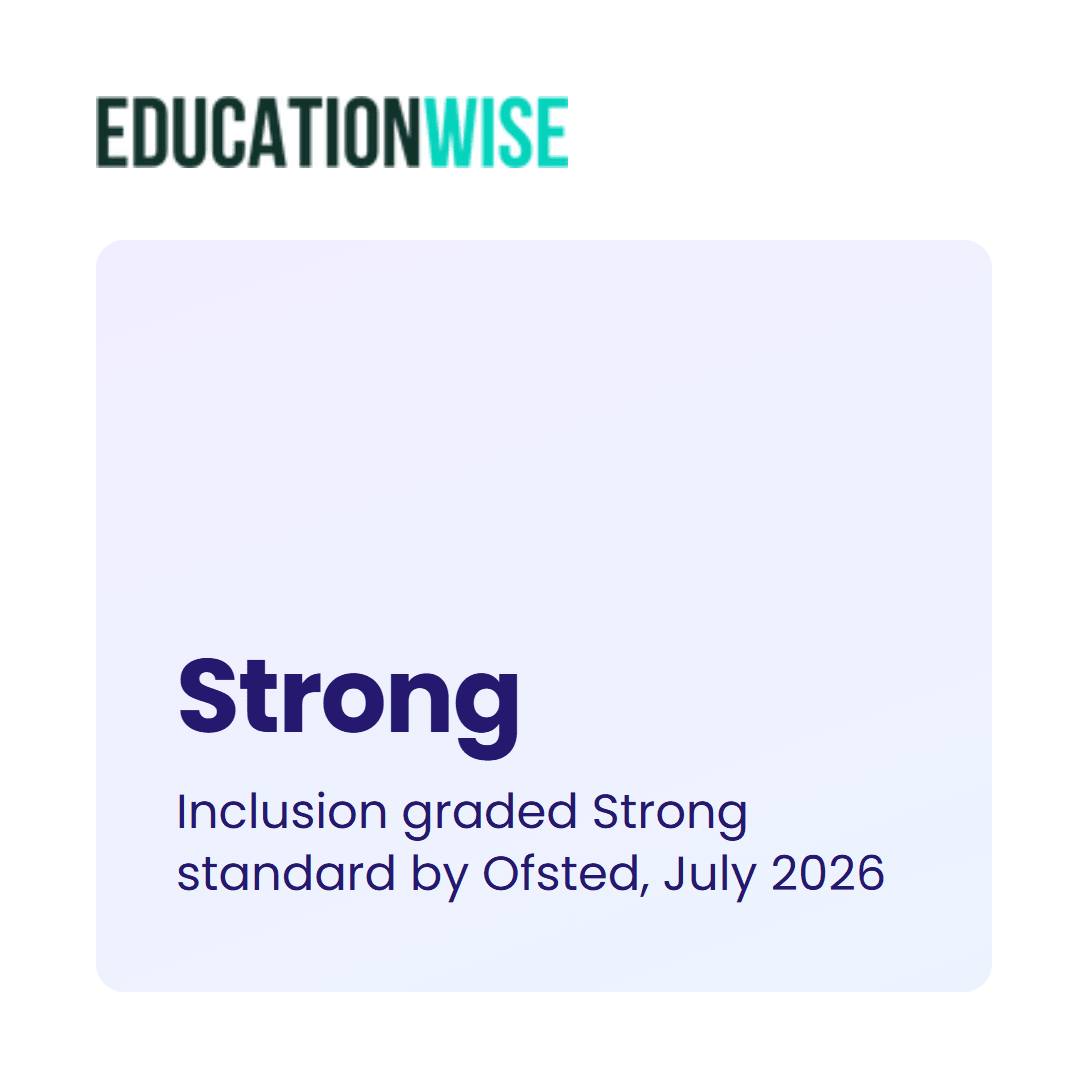
Educationwise measures at enrolment, and Ofsted graded its inclusion Strong standard
When Ofsted inspected Educationwise in July 2026, inspectors graded inclusion Strong standard, finding "comprehensive and rigorous processes to assess swiftly the support that apprentices and adult learners need". Every apprentice is set up to take the cognitive assessment at enrolment, alongside English and maths.
“We give the learner all the tools and support they need from the start of the qualification, rather than two, three, six months in. We can identify those barriers straight away, and we know exactly how to support them.”
How it works
What finding needs at the start looks like
The cognitive assessment sits in initial assessment at enrolment, alongside what the learner tells you and their English and maths. Some providers assess every starter, others start with a programme or a cohort: you choose.
The learner takes the assessment
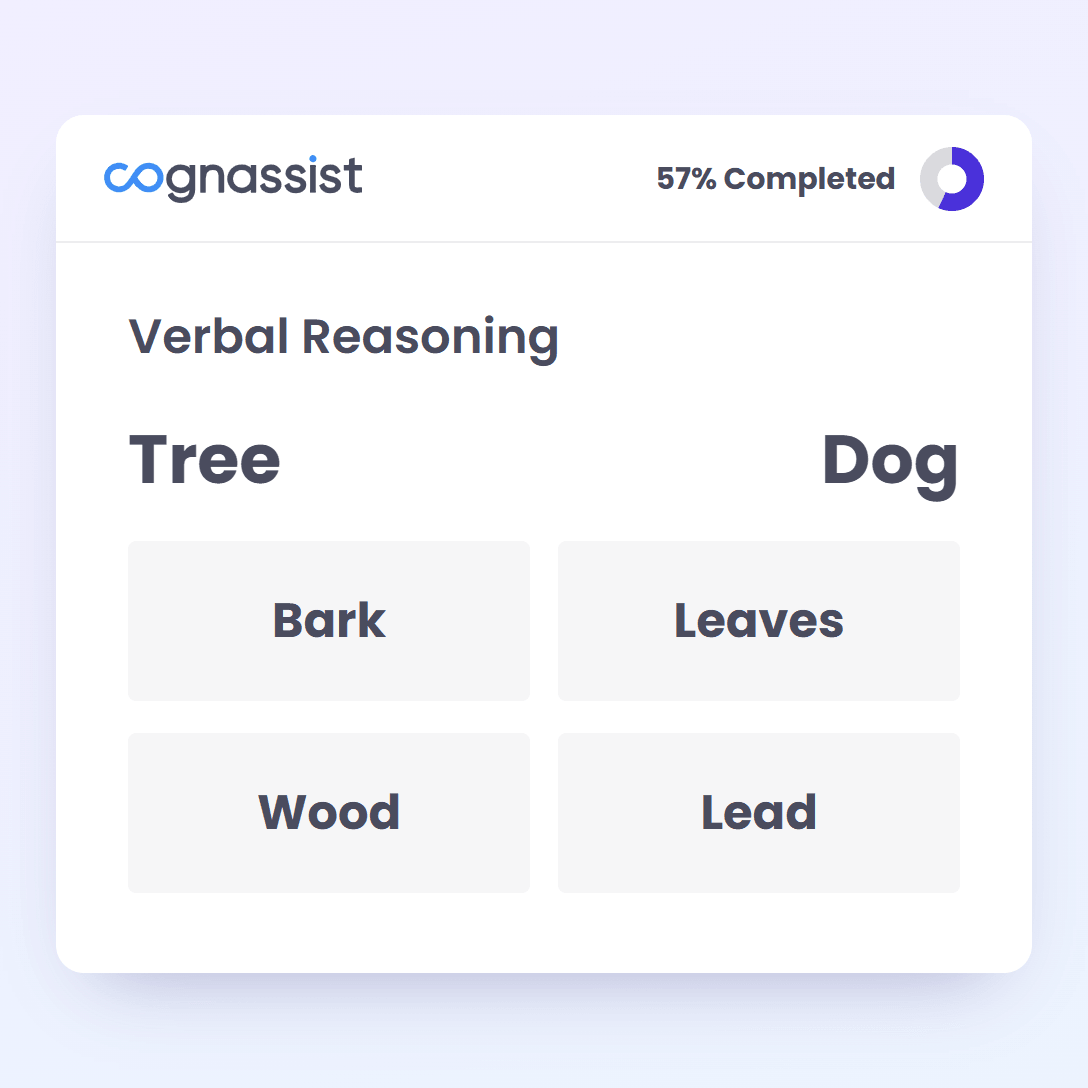
Approximately 30 to 40 minutes, online, across nine areas of cognition, each with its own check that the learner was engaged. The learner does tasks; nobody asks them to describe themselves.
The tutor sees what it found
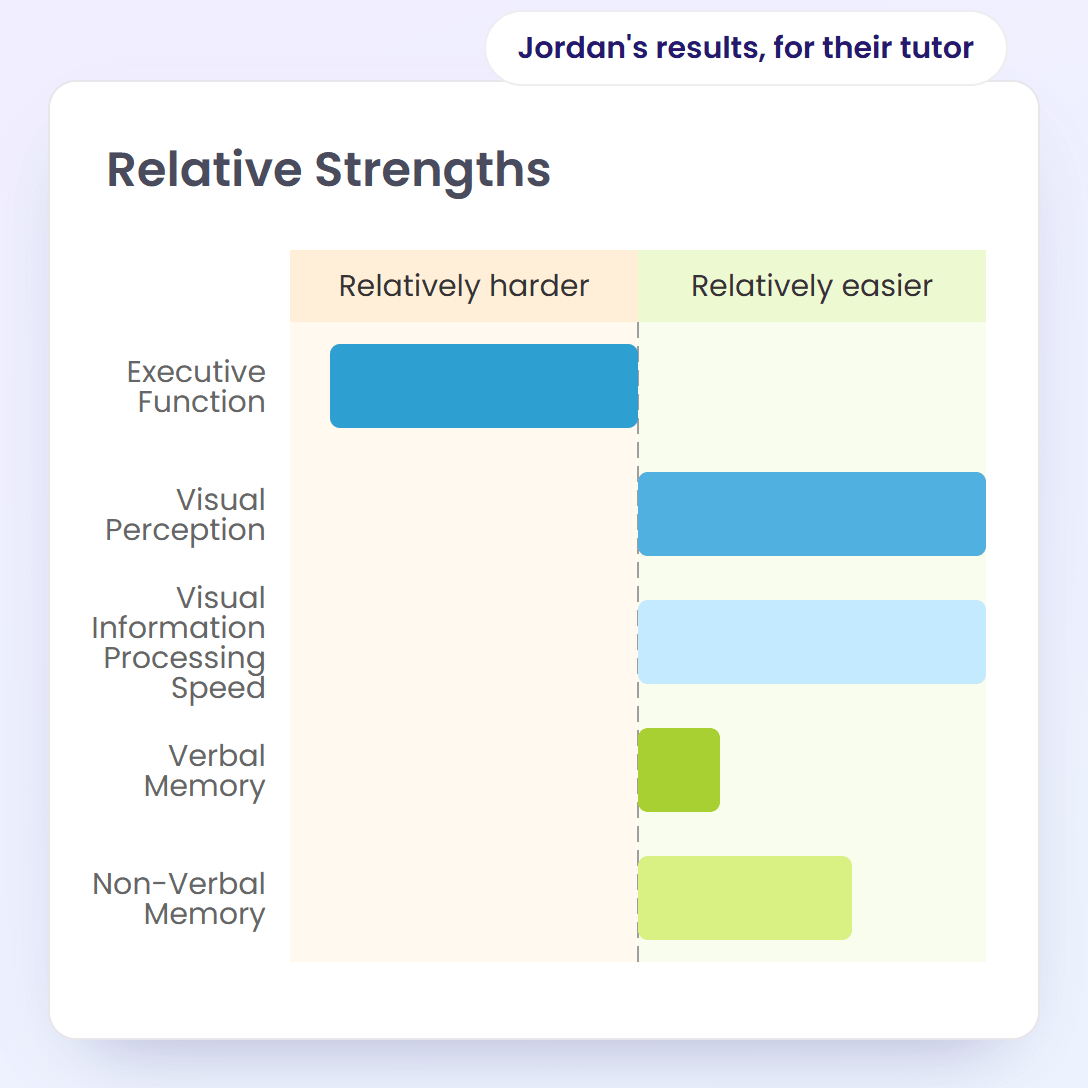
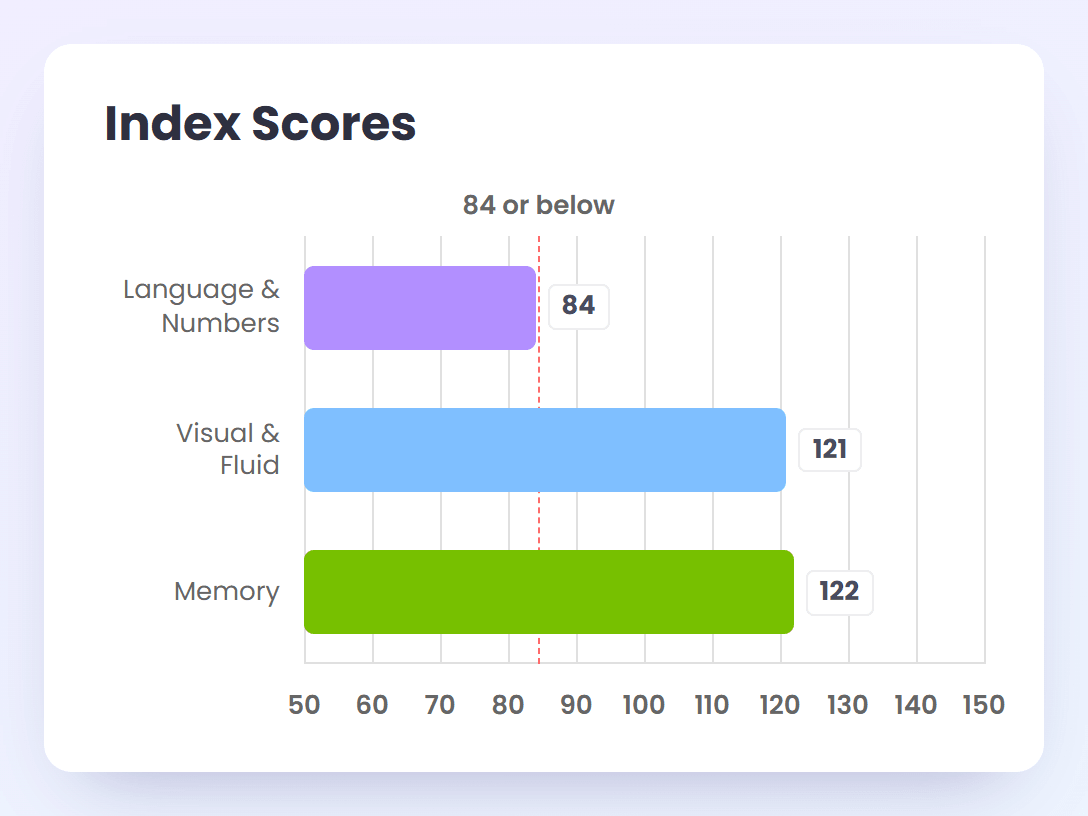
The learner's results, strengths first, then the areas that may get in the way, each measured against learners like them. It prompts a conversation, beside what the learner and your staff already know, and any plan they arrived with.
They talk, and agree what would help
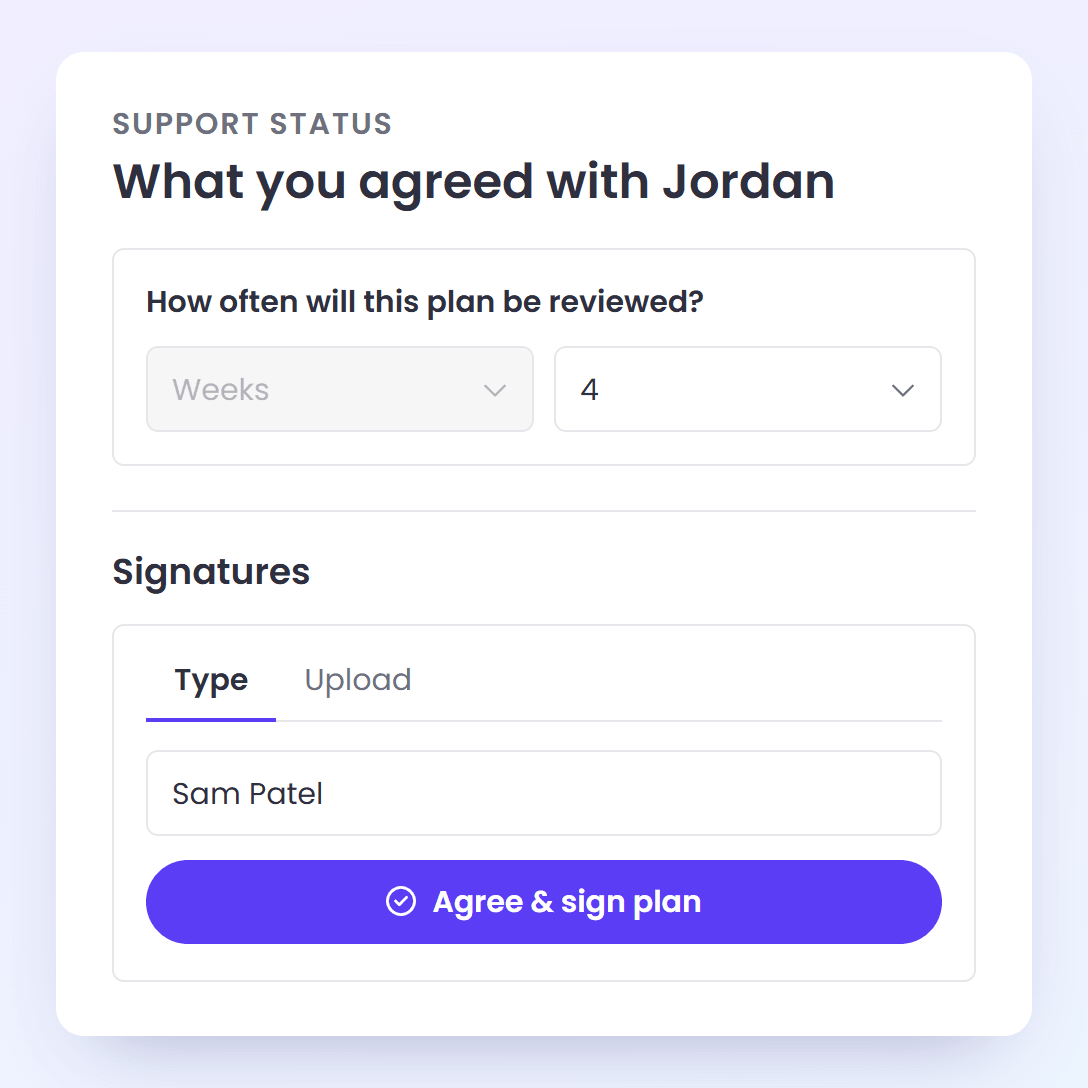
In the needs conversation, where a barrier is found, a personalised support plan is generated in approximately 10 minutes, for the tutor to tailor. The learner agrees it, or chooses not to, and support is recorded as it is delivered.
Once you decide to measure, what you measure with matters
A score is only as good as the evidence behind it, so ask for the evidence before you ask the price. Here is ours.
- Normed on 26,865 UK apprentices, with age norms from 14 to 70
- Independently validated as accurate and robust, and reviewed by the Professional Association of Teachers of Students with Specific Learning Difficulties (PATOSS)
- Decision scores reliable to a good to excellent standard, with internal consistency of .91 and .93 on two of the three indexes
- An engagement check on each of the nine areas, and never the only basis for a decision
Providers who find needs at the start
…the achievement rate of apprentices with barriers to their learning has substantially increased and is in line with their peers.
It happens at induction for us… it starts the conversation about what would help, what do you think the barriers are, Cognassist is suggesting this, do you agree with that? Do you think this would help?
The alternative was to increase our specialist resource fivefold. The trial gave us confidence that Cognassist can deliver what we need to empower our existing tutors to provide high-quality, personalised learning support at a scale that specialist teams alone could never reach.
FAQ
Questions
Does Ofsted require a cognitive assessment?
No. Ofsted names no method. Inspectors ask how staff identify learners who need support, and look for early and accurate assessment of learners' needs. Measuring at the start is one way to do that well, alongside what learners tell you.We already ask every learner and screen at onboarding. Isn't that enough?
Keep both: each finds something. But declaring depends on knowing, and on choosing to say. A learner can only tell you about a need they know they have and want to share. A measure at the start waits for neither.Many of our learners already declare a need, and some arrive with an EHC plan. What does this add?
Keep both: they matter. A declaration tells you a learner has a need, and an EHC plan sets out support for the most significant needs. Neither shows your tutors how each learner processes, remembers and reasons. The cognitive assessment does, for learners with a plan and those without, so the support that fits each one is planned from the start.Is it a diagnosis?
No. It identifies potential barriers, such as the cognitive differences associated with dyslexia, as a prompt for a conversation and for support. It is never the only basis for a decision. Where a diagnosis or formal exam access evidence is needed, a qualified specialist still does that work.How long does it take, and when?
Approximately 30 to 40 minutes, online, at enrolment as part of initial assessment. It covers nine areas of cognition, each with its own check that the learner was engaged.Do we have to assess every learner?
No. Some providers assess every starter, as they do for English and maths; others start with a programme or a cohort. The more you measure at the start, the fewer needs wait for a learner to declare them.Does it replace our learning support team or SENDCo?
No. It gives every learner who takes it a consistent starting point, so your specialists' time goes to the learners who need it most, and your tutors have what they need to support the rest.Does it work with the systems we already use?
Learners can be created and invited from several apprenticeship e-portfolios and delivery platforms, and their results come back into the learner's record there. Other systems connect through our public API. We'll go through your setup in the demo.What does it cost?
It depends on your provision and how many learners you assess, so we price it in the demo for your setup. The comparison worth making is the cost of finding and supporting need, from the first flag to the evidence record, not a price per assessment.
Where to go next
What the cognitive assessment measures
The areas it covers, how each result is reached and what it means for a learner's support.
Address each need once you've found it
Meet the needs you find consistently across your provision, from the support plan to the evidence record.
How Bradford College finds needs from day one
An FE college that made the cognitive assessment a cornerstone of its initial assessment, across apprenticeship, adult and Access programmes.
Find the needs your learners haven't told you about, from the start
We'll build the demo around your provision, showing how a cognitive assessment at the start fits your initial assessment, alongside what your learners tell you.