
The science, explained: Reliability
If the learner took it again, would they get a similar score?
Bathroom scales that show a different weight each time you step on: you would stop trusting them. A learner's score has to hold steady too.
The short answer
Reliability
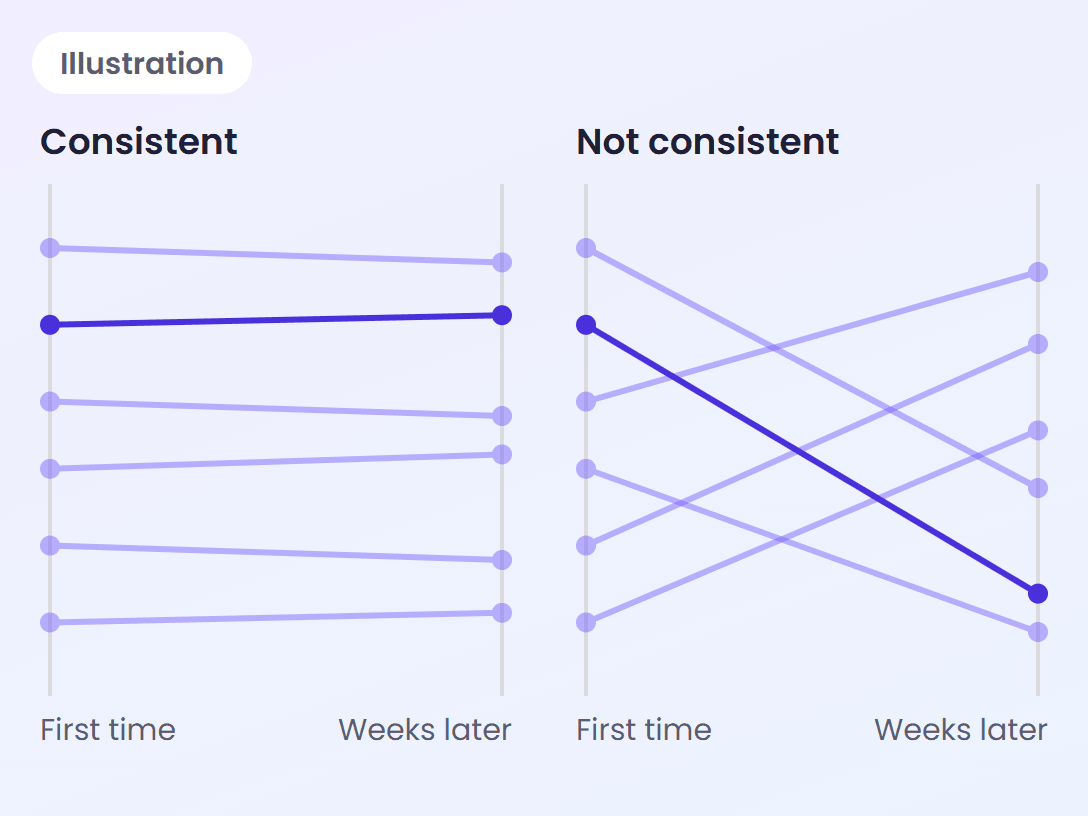
Reliability is how consistent a score is: a learner who took the same assessment again a few weeks later should get much the same result. The more reliable a score, the smaller its margin of error, and the more safely you can act on it. The scales that show the same weight every time are the reliable ones, and the ones you'd trust.
A score you can build on
A tape measure that gives a different length each time you measure the same table: you couldn't use it to build anything. A learner's support starts from their score, so the score has to come out much the same again. A cognitive assessment is used once, at the start of a programme, not every week. So it needs evidence that it would say the same again.
What the science calls it
Three terms you may see in a report
The scales and the tape measure have already shown you the idea. These are the names the science gives to what they showed.
- Test-retest reliability
- The same learners, assessed again weeks later, get much the same results. The chart shows what that looks like.
- Internal consistency
- The tasks that make up a score agree with each other, so the score isn't resting on one task.
- Margin of error
- No score is exact. Every score carries a little give either way, so two sittings rarely match point for point.
Why it matters before you act on a score
A support decision rests on it. A score that might come out differently next month can put support in the wrong place. Before you plan around it, you need to know it would say much the same again.
Ask any assessment, ours included. How reliable are the scores used to decide whether support is needed, and how was that checked? It's a fair question to put to any assessment before you choose one.
Consistent isn't the same as right. A score can come out the same every time and still measure the wrong thing. Whether it measures what it says it measures is validity, a separate question. Does it measure what it says it measures?
How our assessment measures up
The scores used for decisions meet a good-to-excellent standard
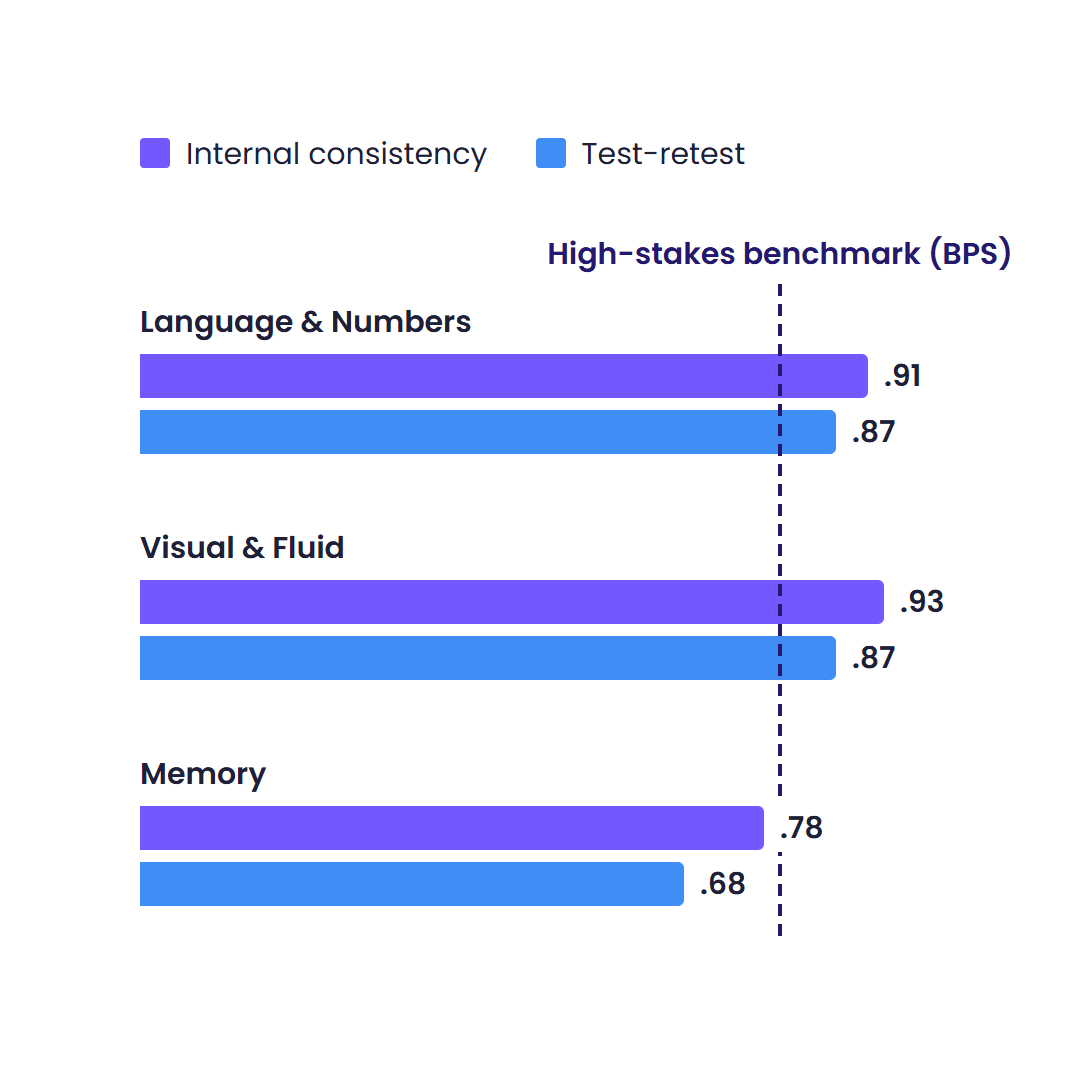
The cognitive assessment produces three index scores, and they're the scores used to decide whether support is needed. Each is checked for internal consistency and for test-retest reliability, with 112 people taking the assessment twice, at least 30 days apart.
- Language & Numbers and Visual & Fluid lead: internal consistency of .91 and .93, and test-retest of .87 for both, all above the British Psychological Society's (BPS) .80 benchmark for high-stakes decisions.
- The Memory index is lower, at .78 and .68: just below the BPS benchmark, and still within the good range.
- What that means for you: the scores used for support decisions would come out much the same a month later, and no decision rests on one task alone.
Questions tutors ask
Does a reliable score mean an accurate one?
No. Reliable means consistent: the score would come out much the same again. Whether it measures what it says it measures is validity, a separate question. Put simply, reliability is consistency, validity is truth, and a score you act on needs both.
Would a learner get exactly the same score again?
Not exactly, and that's expected: ordinary ups and downs move any score a little either way. What you're looking for is much the same result, not an identical one, and that's what the retest evidence checks.
What if a learner has a bad day when they take it?
It can lower their score. Reliability means the assessment gives much the same result each time it's taken; it can't stop a bad day affecting someone's score. If they were clearly unwell, an administrator at your organisation can reset the assessment. A score is never the only basis for a decision: it starts a conversation with the learner, and your judgement and what you see over the weeks decide.